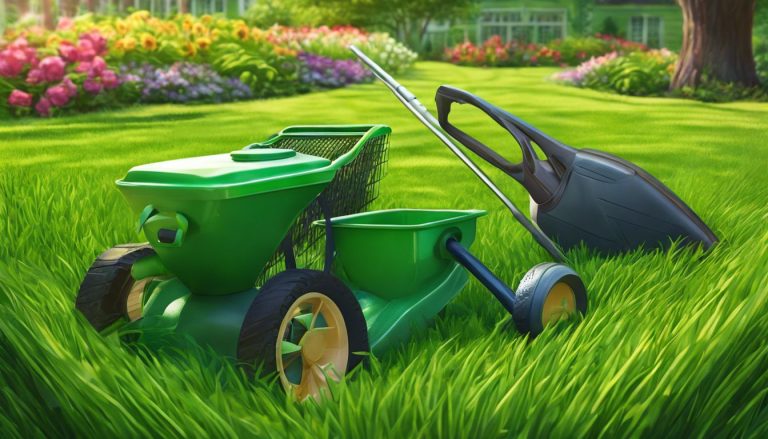
When to Use 28-0-3 Fertilizer for Your Lawn: Finding the Best Time
Ever found yourself gazing out at your lawn, feeling a twinge of envy for those picture-perfect green spreads showcased in gardening journals? You’re certainly not on that quest alone.
Like you, I’ve faced the challenge of finding just the right time to sprinkle that all-important fertilizer for a garden that radiates health and beauty.
Fear not, because after diving headfirst into the world of fertilizer mix ratios, I’ve emerged ready to share some actionable insight with you. Today’s discussion zeroes in on 28-0-3—a potent formula tailored to give your lawn a much-needed boost of verdant life precisely when it yearns for it most.
This guide is set to walk you through identifying those prime moments to nourish your grass with this high-energy cocktail. So gear up—your ideal lush lawn isn’t just fantasy; it’s within reach!
Key Takeaways
- Use 28-0-3 fertilizer in early spring to start the grass growth and again in autumn to strengthen roots for winter.
- Check soil temperature, which should be at least 55°F, and apply before rain for the best results.
- The numbers on a fertilizer bag represent nitrogen, phosphorus, and potassium; choose the right N-P-K ratio based on your lawn’s needs.
- Apply using spreader settings from the label instructions and water well after spreading so it soaks into the ground.
- Always wear protective gear like gloves when handling fertilizer and keep kids and pets away until it dries.
Understanding Fertilizer Numbers
Fertilizer numbers, also known as N-P-K ratio, are essential for understanding the nutrient content in a fertilizer. The ratio represents the percentage of nitrogen, phosphorus, and potassium in the fertilizer mix, which is crucial for maintaining a healthy lawn.
Nitrogen, Phosphorus, Potassium
I always look at the numbers on a fertilizer bag to know what I’m giving my lawn. These numbers tell me the mix of nitrogen, phosphorus, and potassium, or N-P-K for short. Nitrogen is what makes my grass green and helps it grow leaves quickly.
Phosphorus supports strong root growth, but 28-0-3 doesn’t have any because not all lawns need more phosphorus. Potassium strengthens my grass against diseases and weather changes.
Choosing the right N-P-K ratio for my lawn matters a lot. A high-nitrogen blend like 28-0-3 is great when I want to boost leafy growth, especially in spring or fall. It’s when the roots are hungry after winter or getting ready before cold comes back.
No phosphorus means I’m being kinder to nature if my soil’s already got enough. Plus, that dose of potassium sets up my lawn to fight stress from heat or cold seasons ahead.
Importance of N-P-K ratio
Understanding the N-P-K ratio – which represents the percentage of nitrogen, phosphorus, and potassium in a fertilizer blend – is crucial for maintaining a healthy lawn. The N-P-K ratio indicates the specific nutrients available to your grass, with nitrogen being essential for lush, green growth.
Phosphorus supports root development and flower production while potassium strengthens plants’ immune systems and helps them withstand stressors like heat and cold. These three elements work together to promote overall turf health, making it vital to choose fertilizers with an appropriate balance of N-P-K ratios based on your lawn’s specific needs.
As we delve into the importance of understanding N-P-K ratios, keep in mind that different seasons call for varying levels of these nutrients. For instance, high-nitrogen fertilizers like 28-0-3 play a pivotal role in stimulating robust leafy growth during spring but may not be suitable for winterizing your lawn due to excessive phosphorus content.
When to Use 28-0-3 Fertilizer for Your Lawn
Understanding the best time to use 28-0-3 fertilizer for your lawn is crucial for optimal results. Factors to consider include the season, soil test results, temperature, and weather forecast.
Best fertilizer ratios for different seasons
- In early spring, use a low nitrogen weed and feed fertilizer to kickstart the grass’s growth.
- Prior to spring, apply 28-0-3 fertilizer to promote healthy green leafy growth and prepare for the upcoming season.
- During summer, consider controlled – release fertilizers to sustain lawn health during hot weather.
- In fall, use 28-0-3 fertilizer again to prepare the grass for winter and encourage strong root development.
- Before winter sets in, prioritize fertilizers with potassium to help the lawn endure colder temperatures.
Factors to consider (soil test, temperature, forecast)
To determine the best time to use 28-0-3 fertilizer, consider these factors:
- I check my soil’s pH level before fertilizing. A soil test helps understand its composition, ensuring the right nutrients are added.
- Soil temperature should be at least 55°F for optimal fertilizer uptake, supporting healthier grass growth.
- Analyzing the weather forecast ensures that rain is expected within a day or two after application, aiding in activating and distributing the fertilizer into the soil.
- Assessing the overall health of my lawn guides me on whether it requires additional nutrients or specific treatments based on its condition.
- With this knowledge, I can make informed decisions about when to apply 28-0-3 fertilizer for maximum lawn benefit.
How to Apply 28-0-3 Fertilizer
To apply 28-0-3 fertilizer, it’s important to choose a high-quality product and carefully measure the amount needed for your lawn. Using the correct spreader settings and following safety precautions will ensure proper application for optimal results.
Choosing a high-quality fertilizer
Selecting the right fertilizer is crucial for a healthy lawn. Look for a high-quality option with slow-release nitrogen, which provides lasting benefits to your grass. Consider fertilizers like 28-0-3 blend that are rich in nitrogen and free of phosphorus, promoting vibrant green growth without overstimulating unwanted seed sprouting.
Always examine the N-P-K ratio on the label to ensure it aligns with your lawn’s needs. Additionally, prioritize organic or natural-based products that enrich soil health while nourishing your turf.
By understanding these factors, you can confidently pick a high-quality fertilizer tailored to your lawn’s specific requirements for optimal results.
Correctly measuring and using spreader settings
Choosing a high-quality fertilizer is important, but using the right spreader settings ensures that the fertilizer is applied effectively. Here’s how to correctly measure and utilize spreader settings for 28-0-3 fertilizer application:
- Measure your lawn area accurately, considering any irregularities or obstacles.
- Check the product label for spreader settings specific to your brand and model of spreader.
- Adjust the dial on your spreader to the recommended setting, as indicated by the fertilizer manufacturer.
- Fill the hopper with the 28-0-3 fertilizer, ensuring it’s evenly distributed throughout.
- Begin walking at a steady pace, overlapping slightly with each pass to prevent missed areas.
- Pay attention to wind conditions so that the particles distribute evenly and do not drift into non-target areas.
- After spreading, water your lawn thoroughly to activate the fertilizer and help it penetrate into the soil.
- Clean your spreader after use to prevent corrosion and ensure accurate settings next time.
- Store any remaining fertilizer properly according to manufacturer recommendations for future use.
- Regularly calibrate your spreader to maintain accurate application rates based on changes in product density and granule size over time.
Safety precautions
Before applying 28-0-3 fertilizer to your lawn, it’s important to take some safety precautions to protect yourself and the environment. Here are some essential safety measures to keep in mind:
- Always wear protective clothing, including gloves, long sleeves, and closed-toe shoes when handling fertilizer.
- Keep children and pets away from the area during and after fertilization until the product has been watered in and the grass is dry.
- Carefully follow the manufacturer’s instructions for application rates and techniques to avoid over-fertilizing or damaging your lawn.
- Store leftover fertilizer in a cool, dry place away from direct sunlight and moisture to prevent clumping or deterioration.
- Use a dedicated spreader for applying fertilizer to avoid cross-contamination with other lawn care products.
- Be mindful of water sources such as rivers, lakes, and wells when applying fertilizer near these areas to prevent pollution.
- Clean any tools or equipment used for fertilizing thoroughly after use to prevent accidental exposure or contamination in the future.
- In case of accidental ingestion or exposure, seek medical attention immediately and have the fertilizer label on hand for reference.
Mythbusting: The Truth About Fertilizer Numbers
There are many myths surrounding fertilizer numbers, and it’s important to debunk them in order to understand the true importance of N-P-K ratios. By clearing up common misconceptions, you’ll be able to make informed decisions about the best fertilizer for your lawn care needs.
Debunking common misconceptions
When using 28-0-3 fertilizer, it can be beneficial to debunk common myths and misconceptions. Here are some important points for gardeners to consider:
- Myth: More fertilizer is always better for my lawn.
- Fact: Over-fertilizing can harm your lawn and the environment by causing nutrient runoff.
- Myth: Fertilizer should be applied during the hottest part of the day.
- Fact: It’s best to apply fertilizer in the cooler morning or evening to prevent burning your grass.
- Myth: Fertilizer can replace proper watering and mowing practices.
- Fact: Fertilizer is a supplement to good lawn care practices, not a substitute for them.
- Myth: All fertilizers work the same regardless of N-P-K ratios.
- Fact: Different ratios have specific effects on grass growth and health.
- Myth: Fall fertilization isn’t necessary.
- Fact: Fall fertilization strengthens roots, helping your lawn survive harsh winters and thrive in spring.
- Myth: Fertilizer will fix all my lawn problems.
- Fact: Identifying specific issues such as soil compaction or pests is crucial for optimal lawn health.
Importance of understanding fertilizer numbers for optimal lawn care.
Understanding fertilizer numbers is crucial for maintaining a healthy lawn. The N-P-K ratio on fertilizer bags indicates the percentage of nitrogen, phosphorus, and potassium in the blend.
This knowledge helps in choosing the right fertilizer for specific needs and understanding how it will impact lawn growth. When applied correctly, fertilizers with suitable ratios can significantly improve the health and appearance of your lawn by providing essential nutrients at different stages of its growth cycle.
To achieve optimal lawn care results, it’s essential to comprehend and consider these numbers when selecting and applying fertilizers. This understanding empowers gardeners to make informed decisions about their lawn maintenance practices based on specific seasonal requirements and soil conditions.
Conclusion
In conclusion, using 28-0-3 fertilizer is best before expected rain. It’s high in nitrogen and helps green leafy growth. Apply it before spring or in autumn for healthy root growth.
Remember to understand the numbers on fertilizer labels. They can impact the lawn’s health and growth significantly.

I’m Giulia Moretti, a gardening enthusiast, blogger, and farmer dedicated to sustainable agriculture practices. With hands-on experience managing my own farm, I’ve learned valuable insights into fertilization techniques and soil health. Through Fertigation Direct, I aim to share my knowledge and empower others to achieve successful harvests and vibrant gardens.